
The History of Freemasonry in Colorado
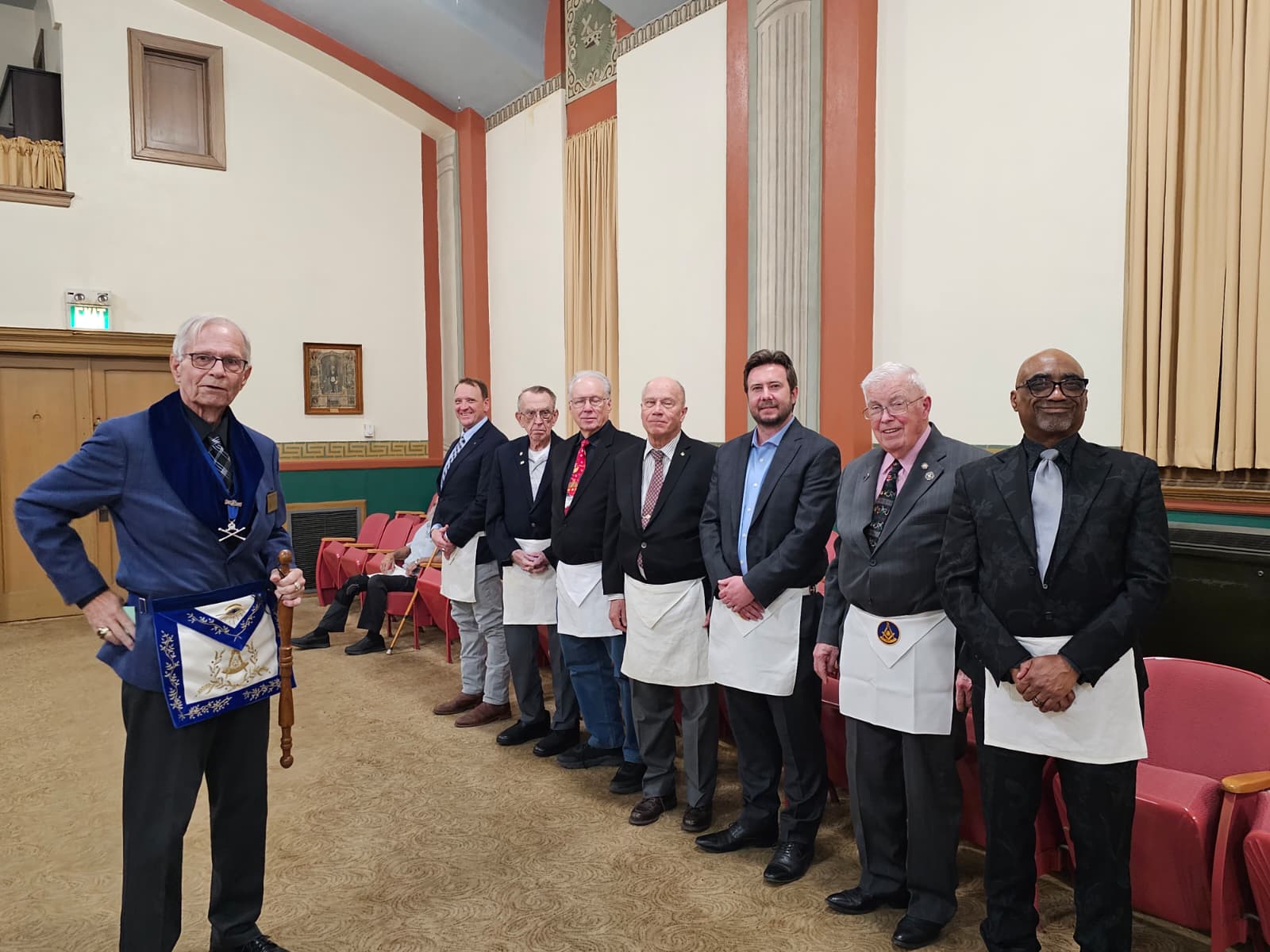
Freemasonry arrived in Colorado with the first wave of American pioneers, taking root in a frontier that had few other institutions of fellowship or moral structure. From informal gatherings of Masons in 1858 to the formation of a Grand Lodge in 1861, the fraternity helped shape the territory before Colorado achieved statehood in 1876. Key figures included Henry M. Teller — Colorado’s first U.S. Senator and Grand Master in 1863 — and John Chivington, the first Grand Master in 1861, whose reputation was permanently diminished by his command at the Sand Creek Massacre of November 1864. Today the Grand Lodge of Colorado has over 100 active lodges and approximately 5,000 members across the state.
Gold Rush Beginnings (1858–1859)
The story starts with the Pikes Peak Gold Rush. In 1806, explorer Zebulon Pike — a Master Mason of Lodge No. 3 in Philadelphia — mapped the area and gave the famous peak his name. Gold discoveries drew crowds, but the rush exploded in 1858.
William Green Russell led a party to the South Platte River near modern Denver on June 23, 1858. They found gold and built the first cabin. More Masons arrived, including Henry Allen from Iowa and Charles Blake. They formed town companies: Auraria on October 30, 1858, and Denver City on November 16.
Informal Masonic meetings began November 3, 1858, in Allen’s tent with seven Masons. They met weekly for mutual support. By December 27, twenty-six Masons celebrated St. John’s Day together — before any churches or schools had been established in the territory.
John Gregory’s gold strike on May 6, 1859, boomed the population. Masons built Colorado’s first Masonic hall — a log cabin in Central City — on June 15, 1859. A marker stands at the site today.
Forming Official Lodges (1859–1861)
The Rocky Mountain News, started April 23, 1859, by future Mason William Byers, advertised Masonic meetings. Auraria directors donated land to Masons in January 1859.
The Grand Lodge of Kansas granted Auraria Lodge permission on August 15, 1859. Its first meeting drew over 40 attendees. Golden City Lodge received its charter October 17 as No. 34. Nevada Lodge followed December 22, 1860.
Masons shaped early territorial government. In April 1859 meetings, Masons including Russell and Allen helped draft laws and organize the Jefferson Territory.
Colorado became a territory February 28, 1861. Nebraska’s Grand Lodge chartered Summit Lodge No. 7 and Rocky Mountain No. 8 on June 5.
The Grand Lodge Forms (1861)
On August 2–3, 1861, in Golden City, representatives from three lodges created the Grand Lodge of Colorado. John Chivington became the first Grand Master. Lodges were renumbered: Golden City No. 1, Summit No. 2, Rocky Mountain No. 3.
The first annual meeting was December 10–11, 1861, in Denver. Auraria merged into Denver Lodge No. 5. Nevada became No. 4, and Chivington Lodge No. 6 (Central City) was chartered September 30.
Chivington, a Methodist minister and Civil War colonel, served as Grand Master 1861–1862 but was frequently away; Deputy Andrew Mason filled in. The lodge named in his honor was renamed Central Lodge No. 6 in 1868, following Chivington’s command of the Sand Creek Massacre on November 29, 1864, in which Colorado militia attacked a peaceful encampment of Cheyenne and Arapaho people, killing several hundred.
Growth in the Territorial Years (1861–1876)
Membership grew quickly: 154 in 1862, 300 in 1863, 392 in 1864. New lodges included Union No. 7 (Denver, 1863), Black Hawk No. 11 (1866), El Paso No. 13 (Colorado Springs, 1867), and Pueblo No. 17 (1869). Some closed as mining towns became ghost towns.
The Grand Lodge helped form lodges in neighboring territories: Montana (1863), Wyoming (1867–1874), Utah (1868). By 1876, 31 lodges had over 4,000 members.
Notable Grand Masters of the territorial period: Allyn Weston (1862), Henry Teller (1863, 1867–1872), Archibald van Deren (1864), Andrew Mason (1865), Webster Anthony (1873–1874). Masons were prominent in early territorial government, including Governors Samuel Beall and John Evans.
Statehood and 19th-Century Growth (1876–1900)
Colorado became the 38th state on August 1, 1876. Seventeen lodges remained active at statehood. In 1890, the Grand Lodge moved into Denver’s Masonic Temple at 16th and Welton.
The decades between 1870 and 1910 saw strong membership growth, driven by civic ties and charitable work. Temples were built in Denver, Colorado Springs, and other growing cities. Masons supported public schools and community aid throughout the state.
20th Century
In the early 1900s, memorials honored Colorado Masons who served in World War I. The Grand Lodge headquarters in Colorado Springs opened in 1973, housing a library and museum.
Membership peaked after World War II, then declined through the latter half of the century — a pattern consistent with fraternal organizations nationally. Charitable programs expanded during this period: scholarships, retirement centers, and community awards became central to the Grand Lodge’s mission.
Prince Hall Masonry in Colorado (1990–Present)
The recognition of Prince Hall Freemasonry by the Grand Lodge of Colorado has a specific and documented history — one that reflects both the long exclusion of Black Masons from mainstream Masonic recognition and the deliberate steps taken to correct it.
The process began in January 1990, when Grand Master Dwight A. Hamilton recommended to the Annual Communication of the Grand Lodge of Colorado that a committee be appointed to investigate the feasibility of mutual recognition and rights of visitation with the Most Worshipful Prince Hall Grand Lodge F.&A.M. of Colorado and Its Jurisdiction. On April 3, 1990, incoming Grand Master Donald P. Smith formally appointed the special committee. The Grand Lodge ratified recognition through a compact at its Annual Communication in January 1991, recorded in the 1990 Colorado Proceedings.
The compact established that the two Grand Lodges are sovereign and lawful bodies coexisting within the same territory, and that members of each hold full rights of visitation in the other’s lodges. The Prince Hall Grand Lodge of Colorado’s jurisdiction covers Colorado, Wyoming, and Utah. The compact does not permit dual membership between the two jurisdictions.
On October 19, 2022, the Grand Lodge of Colorado A.F.&A.M. and the Prince Hall Grand Lodge of Colorado formally rededicated their compact in the Hall of the Colorado Supreme Court at the Colorado State Capitol — a public ceremonial affirmation of their continuing mutual recognition. The keynote speaker was Wellington Webb, former Mayor of Denver and a Thirty-Third Degree Scottish Rite Mason, Prince Hall affiliated. Both grand lodges are today recognized by the United Grand Lodge of England.
Modern Freemasonry (2000–Today)
The Grand Lodge of Colorado currently has over 100 active lodges and approximately 5,000 members, along with four memorial lodges and one research lodge.
Recent milestones include: virtual lodge meetings during the COVID-19 pandemic (2020–2021); the 159th Annual Communication held January 23–25, 2025; and the centennial of the Fort Collins Temple on October 3, 2025. The Rocky Mountain Conference, held annually since 1952, continues as a regional gathering of Colorado Masons.
A Lasting Legacy
From a tent meeting in 1858 to over 100 active lodges today, Colorado Freemasonry has been woven into the history of the state from its earliest days. The principles that brought Masons together on the frontier — brotherly love, relief, and truth — remain the foundation of the Craft in Colorado.